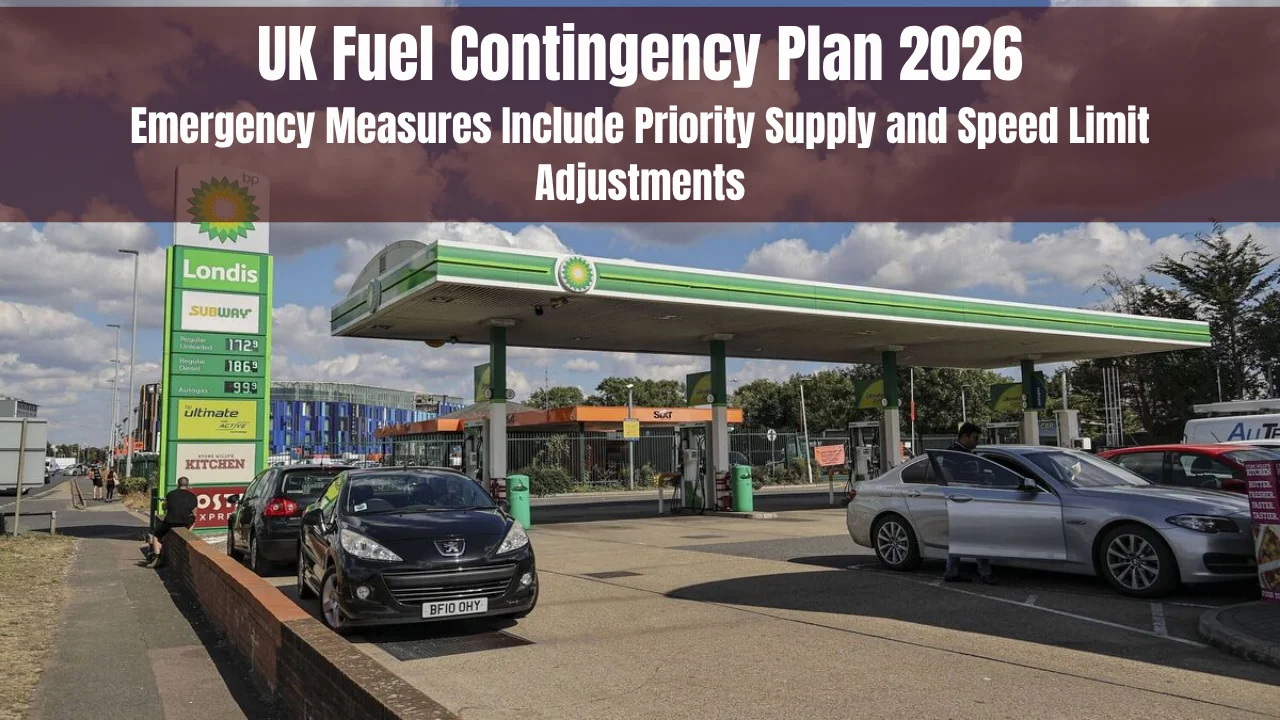
UK Fuel Contingency Plan 2026: UK Fuel Contingency Plan 2026 is now a key topic as global energy tensions begin to influence daily life in Britain. The UK Fuel Contingency Plan 2026 is not just a policy document but a practical roadmap designed to protect fuel supply, support essential services, and keep the economy moving during uncertain times. With rising concerns about oil flow disruptions, many people are asking what this plan actually means for them.
In simple terms, the plan prepares the country for possible fuel shortages without creating panic. It focuses on keeping petrol stations stable, ensuring diesel supply for critical sectors, and guiding people on how to reduce fuel use if needed. This article breaks down the situation, explains what experts are saying, and shows how the government and industries are working together to handle potential risks.
UK Fuel Contingency Plan 2026
The UK Fuel Contingency Plan 2026 is built around readiness and control. It aims to manage fuel supply challenges while avoiding unnecessary fear among the public. Right now, fuel stations are operating normally, but officials are preparing for possible disruptions caused by global conflicts and supply chain pressure. The UK Fuel Contingency Plan 2026 includes steps like prioritising key industries, monitoring diesel availability, and coordinating with major energy companies. It also highlights demand reduction strategies such as remote work and efficient transport use. By focusing on both supply and demand, the plan creates a balanced response that protects essential services and keeps everyday life running smoothly even in difficult conditions.
Overview Table
| Key Area | Details |
| Current Situation | Fuel stations are stable and fully stocked |
| Main Risk | Diesel shortages expected in coming weeks |
| Global Trigger | Disruption in oil supply routes |
| Government Response | Preparing for all possible scenarios |
| Priority Services | Healthcare, food supply, transport |
| Demand Reduction | Work from home and reduced travel |
| Emergency Measures | Fuel rationing and limited sale hours |
| Speed Control | Lower speed limits to save fuel |
| Backup Support | Armed Forces and reserve tankers |
| Industry Role | Coordination with energy companies |
Diesel shortages could hit the UK in late April
Experts in the energy sector have started raising concerns about diesel supply. While petrol remains stable, diesel is more exposed to global disruptions. This is mainly because diesel supply chains rely heavily on international shipping routes.
The situation around key oil transit routes has made supply uncertain. Analysts believe that shortages could begin to show by late April if conditions do not improve. This does not mean that fuel will disappear overnight, but it does signal a tightening supply.
The UK Fuel Contingency Plan 2026 takes this risk seriously. Officials are closely monitoring diesel levels and working with suppliers to maintain steady distribution. The goal is to avoid sudden shortages and keep essential services running without interruption.
Priority for food and drink lorries, public transport and emergency vehicles
One of the strongest parts of the UK Fuel Contingency Plan 2026 is its focus on prioritisation. In a situation where fuel becomes limited, certain sectors will receive access before others.
Key priority areas include:
- Emergency services such as ambulances and fire response units
- Food and drink supply chains to maintain availability in stores
- Public transport systems to support daily commuting
- Utilities and infrastructure services
This structured approach ensures that essential needs are met first. For example, food distribution must continue to avoid shortages, and emergency services must always have reliable fuel access.
Industry voices have also stressed the importance of logistics networks. Without proper fuel allocation, supply chains could slow down, affecting both businesses and consumers.
Sensible measures to reduce fuel demand
Reducing fuel demand is just as important as managing supply. The UK Fuel Contingency Plan 2026 includes practical steps that people and businesses can follow to ease pressure on fuel systems.
Some of the most effective measures include:
- Encouraging remote work where possible
- Limiting non-essential travel
- Promoting public transport use
- Reducing short domestic flights
These steps are based on recommendations from the International Energy Agency, which has previously advised countries on handling fuel shortages.
By adopting these habits early, the country can reduce overall fuel consumption. This helps extend available supply and delays the need for stricter measures.
Fuel rationing and new speed limits
If the situation becomes more serious, stricter actions may be introduced. The UK Fuel Contingency Plan 2026 includes provisions for fuel rationing and speed limit adjustments.
Fuel rationing would limit how much fuel individuals can purchase. This ensures fair distribution and prevents hoarding. It also helps maintain supply for essential services.
Another important step is reducing speed limits. Driving at lower speeds reduces fuel consumption, which can make a noticeable difference across the country. Even small changes in driving habits can lead to significant fuel savings.
These measures are not currently active, but they remain part of the plan if conditions worsen.
Government planning for all eventualities
The government has made it clear that preparation is a priority. Under the leadership of Keir Starmer, discussions with industry leaders are ongoing.
Officials have reassured the public that there is no immediate need for concern. Fuel stations continue to operate normally, and supply remains stable. At the same time, behind the scenes, detailed planning is taking place.
The UK Fuel Contingency Plan 2026 is designed to respond quickly if the situation changes. This balance between calm communication and active preparation is important to maintain public confidence.
Armed Forces could be deployed to help
In more extreme scenarios, additional support systems can be activated. One of these includes the involvement of the Armed Forces.
Their role could involve:
- Supporting fuel transportation
- Driving tankers during shortages
- Assisting with logistics operations
The UK also maintains emergency fuel reserves. These reserves can be released to increase supply when needed. This provides an extra layer of security and ensures that critical sectors are not left without fuel.
The UK Fuel Contingency Plan 2026 includes these backup strategies to handle worst-case situations effectively.
Industry collaboration to manage fuel supply
Managing fuel supply requires cooperation between government and industry. Companies like Shell and BP play a key role in maintaining distribution networks.
Shipping companies, logistics providers, and financial institutions are also part of the effort. This collaboration helps stabilise supply chains and manage rising costs.
The UK Fuel Contingency Plan 2026 relies on this teamwork. By working together, both public and private sectors can respond more effectively to global challenges.
FAQs
What is the UK Fuel Contingency Plan 2026?
The UK Fuel Contingency Plan 2026 is a government strategy to manage fuel shortages by ensuring priority supply and controlling fuel usage if required.
Will fuel rationing happen soon?
There is no immediate plan to introduce rationing, but it remains an option if fuel supply becomes limited.
Why is diesel more affected than petrol?
Diesel depends more on global shipping routes, making it vulnerable to international disruptions.
How can people help reduce fuel demand?
People can work from home, use public transport, and avoid unnecessary travel to reduce fuel consumption.
Is there any need to panic buy fuel?
No, fuel stations are currently well-stocked, and panic buying can create unnecessary shortages.